

Table of Contents
How to make art journaling a satisfying part of your creativity routine
Creativity doesn’t just exist on a plane. It’s something you have to work at and practice growing. If you commit to this, the creative gods will reward you with ideas. You get to decide on how to enact them. Art journaling is one way to nurture this important process. But how do you add art journaling to your creative routine?
Although I actively work to nurture my creativity I also live in a capitalist society. You probably do, too. When I want to make time for free creative exploration, there is a little voice that tells me, “You don’t have time for that.” The voice reminds me of my day-to-day concerns and says, “You’re not getting anything out of daydreaming, or curious exploration. You have to eat after all.”
Do you hear this voice, too?

Money concerns can have you believing the voice. But it’s actually lying to you, and I’ll tell you why.
As creative beings, we need the free time to sit with ideas, to ponder, to explore. Studies show that you can boost your creativity by engaging in free creative play time. We cannot be so single-minded that we eliminate this from our schedule.
Despite all the monetary pressures we face, there must be balance. Otherwise, we lose out on the full benefits that our brains offer us in the way of creativity. Those ideas flit right past us and grace the next person who is willing to spend more time with them.
Although it appears that some people may be more genetically blessed with creative brains, this idea that you either are or aren’t creative seriously needs to be retired. Anyone can boost their creativity, if they work on it. Luckily, that means playing with creative ideas and practicing with your hands! So, don’t feel guilty about ‘wasting your time’ because that couldn’t be further from the truth.
My first experience with art journals
I still remember a trip I took to New York with a friend early in my college career. We visited an exhibit of photographer Peter Beard’s work. Although I enjoyed the photographs on the walls with their luscious tones, I was most drawn to Beard’s journals. Under glass, they were about a foot thick and looked more like encyclopedias. They had inky pen marks that wound around the pages, and giant bugs and other found objects glued into the pages.
I really wanted to get my hands on the journals and leaf through them, but the glass prevented that.
I had kept a journal since I was very young, but the idea of creating imperfect beauty in it was a new one. I found inspiration in these messy and beautiful spaces that Beard had created. I didn’t yet know the term art journal, but the process became part of my consciousness thanks to Beard.


Try art journaling to boost your creativity
Digital photography was just becoming popular when I was in college. In school, we studied both darkroom processing (both black and white and color) and digital image management techniques.
What I loved about the darkroom was the physicality and tactile practice. Yes, there were nasty chemicals involved but using my hands to agitating film, moving the enlarger, and pick up wet prints with darkroom tongs was so enjoyable.
Hand work versus computer work
Editing photos on my computer is fun in a different way. It’s still creative but at some point, the screen tends to suck me into a digital abyss and I have trouble sleeping at night because of the screen time.
Unlike digital photography, it’s fun to get my hands dirty in the art journaling process. Maybe this will also inspire you to add art journaling to your creative routine?
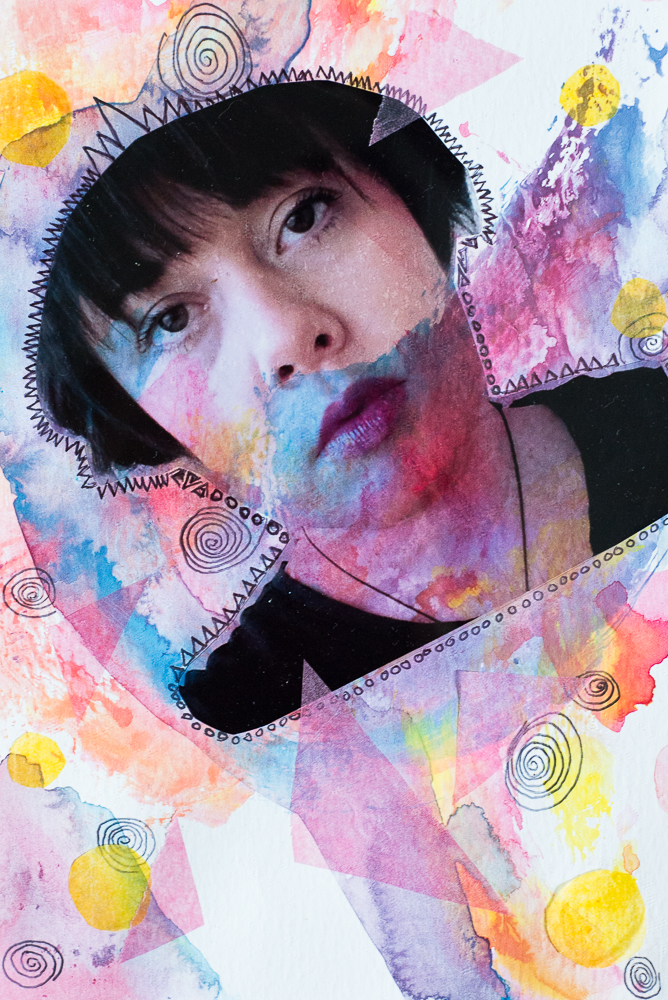
Get out some glue or gel matte medium and a brush. It feels different than clicking your mouse around. Because I love creating double exposures in my photography work, I am able to bring layering techniques into my art journal, as well.
I don’t spend time thinking about whether I am an accomplished artist or not, and art journaling really isn’t about that. Instead, I find the time useful for reimagining creative problems.
Can photographers even art journal?
Uh, yeah. When I spend time in my art journal, I’ll look up at the clock and I am amazed that hours have passed. Art journaling is engrossing.
Perhaps your main focus is in another medium (maybe photography like me), but this experimentation with an art journal can help you approach your primary craft in new and interesting ways. It can help you fine-tune your ideas, or reconnect with things you tried as a child. The best part of art journaling for me is that I am also able to bring the ideas from my art journal time into my photographic work.
But what if I suck?
Art journaling is like yoga. (That’s probably why I like it so much.) Making an art journal is not about how good you are at it. That’s why it’s the perfect medium to grow your creativity.
While you’re engrossed in just expressing yourself, you’re stretching your creative muscles. Later, you can decide if you want to share your work with other people or keep it private. You never have to even share it with a soul unless you want to.
Taking risks is good for your health
Not that I want you jumping off any bridges, but trying new things is good for you! Stop telling yourself you can’t do it because it becomes a self-fulfilling prophecy. The more you try unfamiliar things, the more you evolve as a human being, and come into your own.
Oh, and if you’ve been art journaling for years, please ignore my lecture.
Holding court with creativity even when “you’re too busy”
Figure out a way that you can make art journaling a practice. Whether that’s doing 15 minutes a day, or putting aside an hour or two on the weekends. Doing this work helps me work through emotions and gain clarity, and I think it’s valuable for my mental health. Try it out, and see how it works for you.
Recent articles about taking calculated risks:
https://willowpaule.com/how-to-create-a-compelling-photo-story-free-course/
https://willowpaule.com/video-why-this-woman-crossing-a-shaky-bridge-should-have-you-taking-risks-too/

3 Responses
Do you know what type of journal peter beard used for his diaries?
Hi Phil, sorry for the delay in responding. His notebooks were huge, like think of the size of an encyclopedia. I think he must have bound them himself or had someone create them to order. I hope this helps!
He used a hardbound daily diary/planner, made by “at a glance”.