Table of Contents
My latest interview is with Denise Karabinus, a printmaker living in Hawaii. When her 7-month-old son died in 2013, she didn’t quit making art. Instead, started using art to express her grief, even sharing her art with her therapist.
I know how temperamental I am about having the perfect conditions to create art, and I am inspired by the way she kept up her practice during what such a difficult time. Enjoy the interview below.
When did you first discover that you were a creative being? What were you doing?
I have wanted to be an artist my entire life.
My parents encouraged my creativity from a young age and I clearly remember my mom showing me how to make a symmetrical heart by folding a paper in half and cutting out half a heart. This left a big impression on me and I have been making art out of paper ever since.
How do you express your creativity? And how did you become interested in your creative practice?
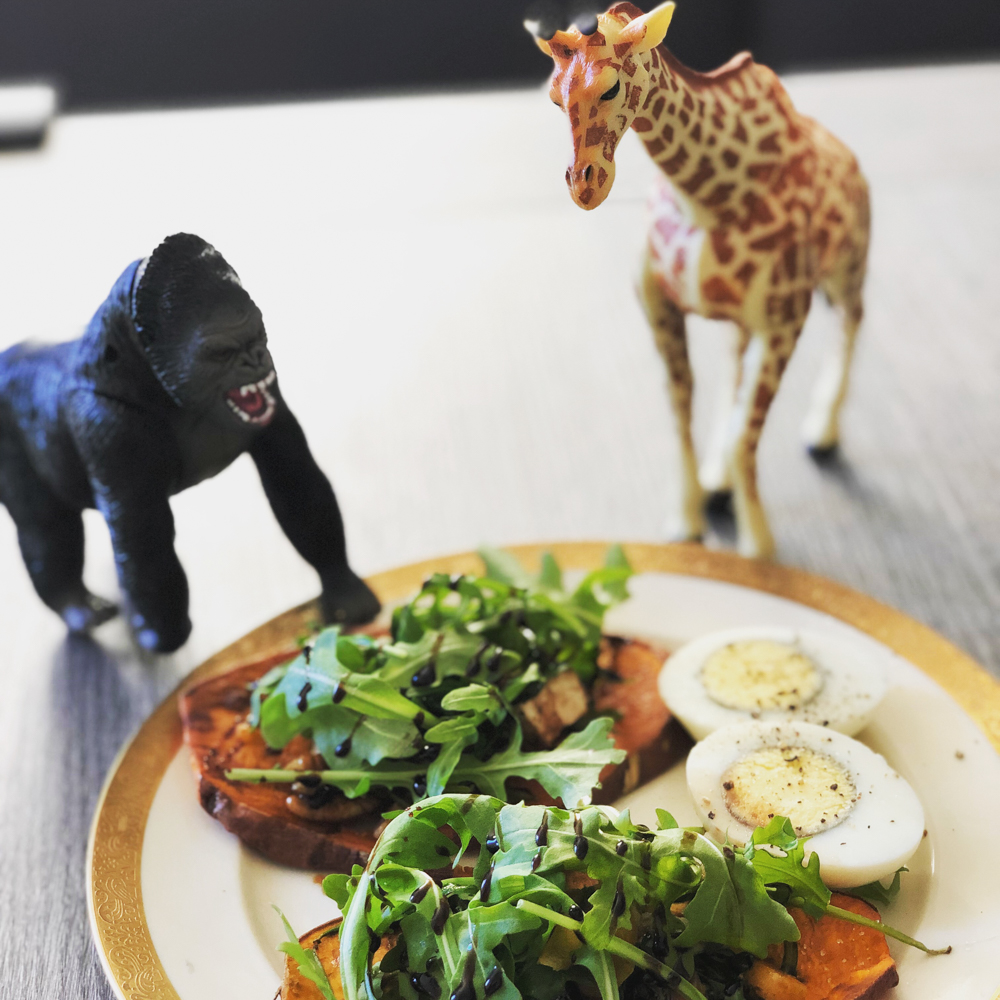
I express myself creatively in every aspect of my life. I recently became a parent so my time is very limited now. I am currently making beautiful healthy food plating it creatively and photographing it with my son’s animals. I also do a quick drawing each day and text it to a friend but previous to this stage in my life I spend hours upon hours printing in the print studio. I mostly created etchings and woodblock prints. I love doing repetitive work so printing comes very naturally to me and is a kind of meditation.

I like your awareness about how creativity can be found in every facet of life. The food project sounds like a fun way to keep up your creative game.
My first introduction to your art was your Tear Mandala series which referenced your 7-month-old son’s death.
How were you able to create art in what must have been such a difficult time? Were you familiar with the media you were using at that time, or was it new to you? Did you use it in a familiar or new way?
How long did you work with the theme? And how was it meaningful for you and for others?
I worked with this theme for five years after his death.
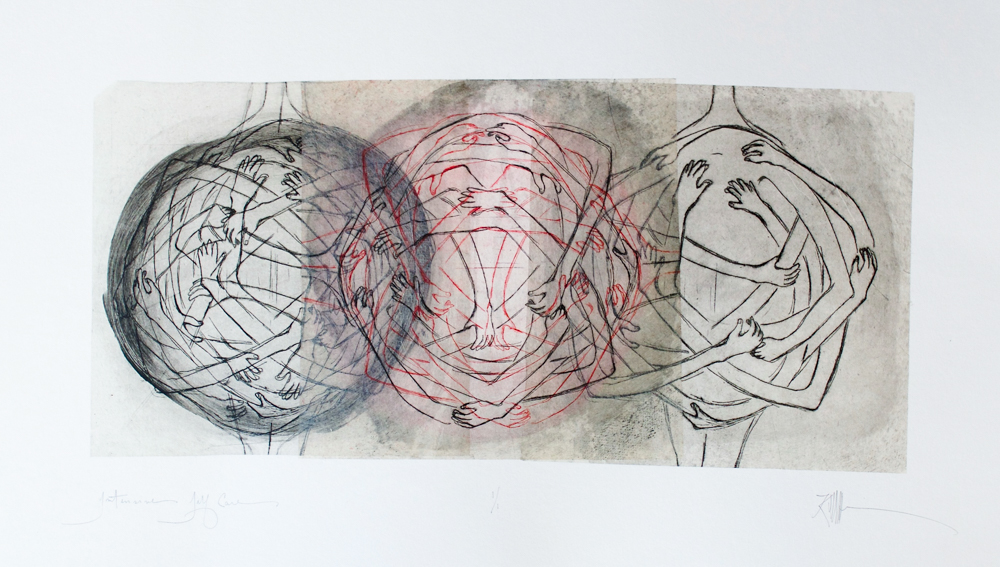
Making art is an essential part of who I am, so making art about my son’s short life felt hard but necessary. In my work, I could tell myself stories about my real emotions and deep grief that I could not express in words.
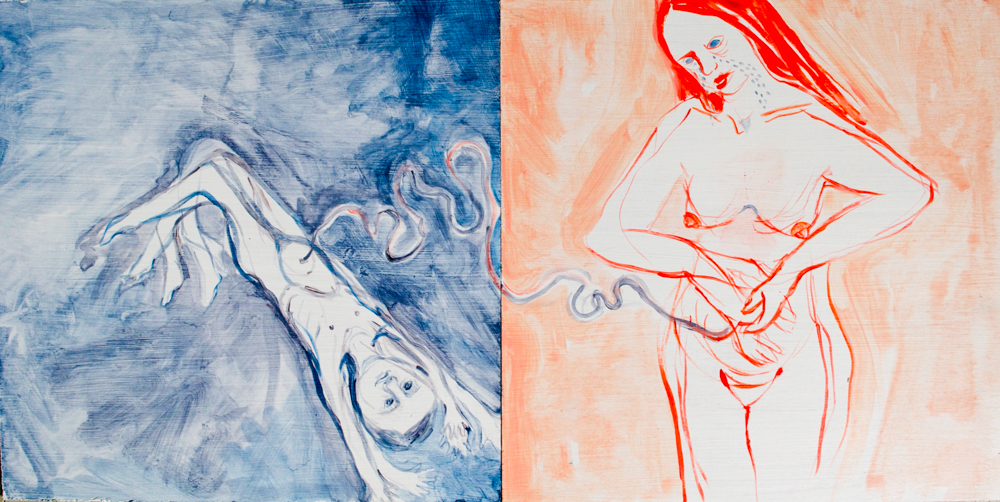
We live in a society fixated on the surface of things and deeply uncomfortable with grief. Words are inadequate for the things I need to say. I created a sculptural whirlpool of tears through a series of drawings and prints. Each individual tear featured blossoms organized tightly together into a beautiful whirlpool.
I was seeing a grief therapist at the time and that helped me sort through that very painful time. I shared a lot of the images with my therapist. The art I made at that time feels like a journal and is very rich with the story of my emotional experience.

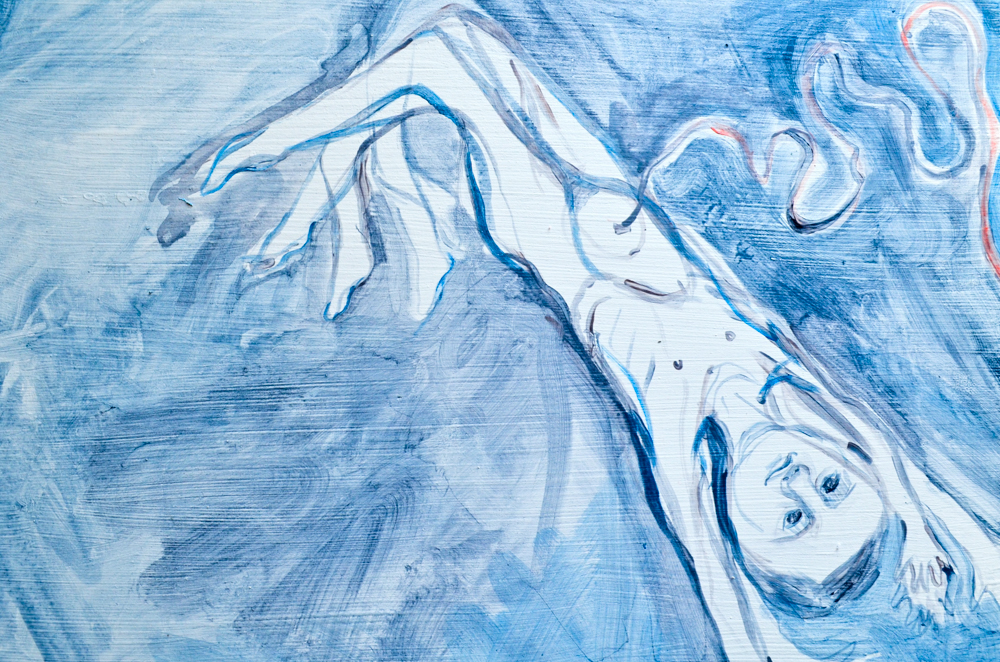
Most of the images came out as monotypes and paintings. Monotype printing has an immediacy that was super important for this work. I worked in a series and used a few matrices such as branches of a tree and a tearful whirlpool that were meaningful and then I let the other details of the artwork flow out of that repeated element. This is a media and a way of working that is very familiar to me. It is a process that I am not precise about and can work for hours creating and recreating new narratives to talk through in the work.

The individual tears are each carefully hand printed onto recycled newsprint from a long hand carved woodblock matrix of 14 teardrop shapes. The hundreds of printed pages are individually watercolored in various shades of the same hue. The tears shapes are carefully cut out by hand and then methodically glued together into an intricate design. The step-by-step work which I like to call a tortured process requires deep focus. It is like meditation. Each piece is part of a series and yet completely unique and could never be reproduced.
The Tear Mandala series asks the viewer to consider suffering and beauty in the same place.

Where do your ideas come from? What influences you?
My ideas come from my life experiences and my connection to the natural world. In this particular work, I was devastated by the loss of my son.
My baby was born with a terminal genetic condition. My husband and I learned that we are carriers of Spinal Muscular Atrophy. Our son’s health deteriorated over 7 months, during which time we resuscitated him many times. He then died in our arms on Jan 2nd, 2013.
We struggled with infertility and genetic problems for 5 years to have a healthy baby; all of this comes through in my work. It was a very painful time for us and that story exposed itself to me in this work. I use elements of nature such as trees, seeds, water drops and water to show my desire to grow out of this experience.


What’s your work process like? Do you create in spurts, or do you schedule your time? Do you make art daily? Describe a day in the life of Denise Karabinus.
At that point in my life, I had so much time to be in the studio. I live very close to the print shop and I can walk to both my studio and to the Honolulu Printmakers studio from my apartment. I worked 5 days a week. And, I would be in the print shop for 5- 8 hours at a time completing a singular task or puttering and mining for new ideas. I also take and teach printing classes which gives me a great sense of direction and structure. It helps me to get into the studio more when I have task-oriented things to show up for and then I get lost in the process spend many hours creating.
I set measurable goals for myself, which also helps, such as, to create 8 – 12” x 12” monoprints that use the tree matrix, and then the work grows out of that measurable goal.


What do you find fulfilling about creating art? And do you expect your art to pay the bills? If not, what does?
I find everything about art fulfilling and cannot imagine doing anything else. The sense of community and belonging that come along with being a printer in a community printshop is something I really crave and strive to nurture.
I do not expect art to pay my bills and that is not something I actively seek out. It is a fun surprise when I sell something but I find that my work changes too much when I am trying to make it to sell.
I needed to make this work about a painful part of my life without thinking about it as a salable item. That being said, I have been very surprised by how many pieces from this series have sold.
I make part of my living teaching classes at an art museum and university. I also have the support of my spouse which allows me the financial freedom to live in a big city and make art in the way that I currently do.

What challenges have you faced in your creative practice?
In the past, my biggest challenges were the usual creative blocks that artists face – the vicious cycle of self-doubt, procrastination, and more self-doubt. I got good at just putting my ass in the chair every day and seeing what would happen. Really all I have to do is show up and the work comes. I try not to judge it much anymore. It wants to come out I just need to give in a page to come out onto.
Currently, I am finding it hard to make time to be in the studio. I have a young child who I worked really hard to bring into this world and I really want to spend most of my time with him at the moment. I have patience about this. Given all we went through to have a baby, I realize that this is a phase of life and soon this will pass and I will be back in the studio. I try to be creative in every aspect of my life and it is very fulfilling creative work raising a child. We draw and make music together every day.
Learn photography
One of the best ways to become a better photographer is to work on a personal photo project.
Sometimes it tough to come up with project ideas, though.
Sign up for WPP’s emails about photography and creativity and receive this free PDF with 10 documentary photo project ideas to fire up your creativity and refine your skills. Here’s the link.

Does society support your creative work? How about your friends and family?
Yes, I feel very supported in my printmaking community. I have many wonderful artist friends in the studio and around town that inspire and encourage me. I am lucky I am not isolated.
What are the three things that have helped you grow as an artist the most?
- Putting my ass in the chair (doing the work).
- Having my own studio outside of my home.
- Working in printmaking communities!


What’s your advice to someone looking to grow in their own creative practice?
- Do something creative every day.
- Make measurable goals. Put some exhibition dates out in front of you -things you want to apply to or small shows in coffee shops, ect. And this is important-hang calendars on your wall so you can visually see your progress and deadlines. Set a goal and work backwards to enact the tasks needed to make it happen. Decide what needs to happen six months, two months and one month before the show.
- Another useful thing to try is when you finish working in your studio make a list of 3 small tasks you can start on the next time you show up to work.
- Take classes at a good school or print studio or writing studio that you feel good about going to. Create a supportive community for yourself. Find your people.
What are you working on currently?
I am currently helping my military students start a Combat Paper program here in Hawaii. We pulped one of their retired military uniforms and made paper. Our veterans need more creative outlets to share and express their experiences so I am helping to get that started.
Bio:
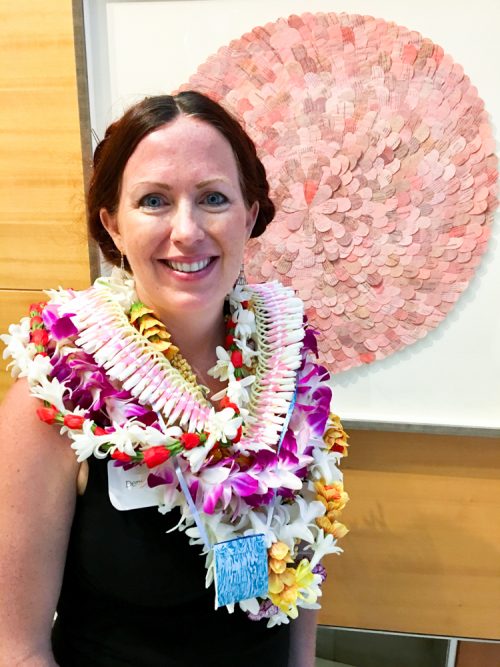
Drawing and printmaking are a primary focus for Denise’s complex installation and community service work. In 2014, Denise was an artist in residence in Paradsinga, India through GRAM International Artist Residency in Community Service.
Her work has been featured in Honolulu Museum of Art, Portland Museum of Art, Art in the Open in Philadelphia, Printmaking Center of New Jersey, Jersey City University, University of Fine Arts Philadelphia and the University of Fine Arts Hanoi. She has taken a leadership role in many excellent printmaking organizations: Running with Scissors, in Portland, ME, Open Studio, in Toronto, New Jersey Visual Arts Center, New Jersey Printmaking Center, and Sweetwater Print Cooperative, in Gainesville, FL.
Denise had the unique opportunity to be the first American exchange student to represent her country while studying at the Hanoi Fine Arts University, in Vietnam after the countries reopened diplomatic relations in 1995 through the Indochina Arts Partnership. She received a degree in printmaking with honors at the Maine College of Art in Portland, ME 1999, and an MFA at Vermont College of Fine Arts in 2007.
Denise is currently researching and sharing ideas about safer printmaking techniques at Honolulu Printmakers in Hawaii and teaching Sustainable Art and Design at Hawaii Pacific University.
All images and artwork © Denise Karabinus.