

Table of Contents
I consider religion and spirituality deeply personal so it’s quite a wonder that I live in Indonesia. People love to talk about religion, listen to religious radio and watch religious TV shows, and debate what religion allows others to do. As a Muslim-majority country, Ramadan is always an interesting time of year here in Indonesia and I decided an article about Ramadan from a non-Muslim viewpoint might be interesting.
I dated my Indonesian partner for many years and recently we got married. He is a Muslim guy, so I’ve been absorbing some basic knowledge about Islam, and the way it’s interpreted here in Java, Indonesia. We just finished up the month-long fast called Ramadan, the biggest Muslim holiday of the year. The fasting month is not exactly all fun and games. But it does serve an interesting purpose of reconnecting with God and remembering that many people struggle with hunger. Taking part in the fast in a good way to remain cognizant of what people go through.
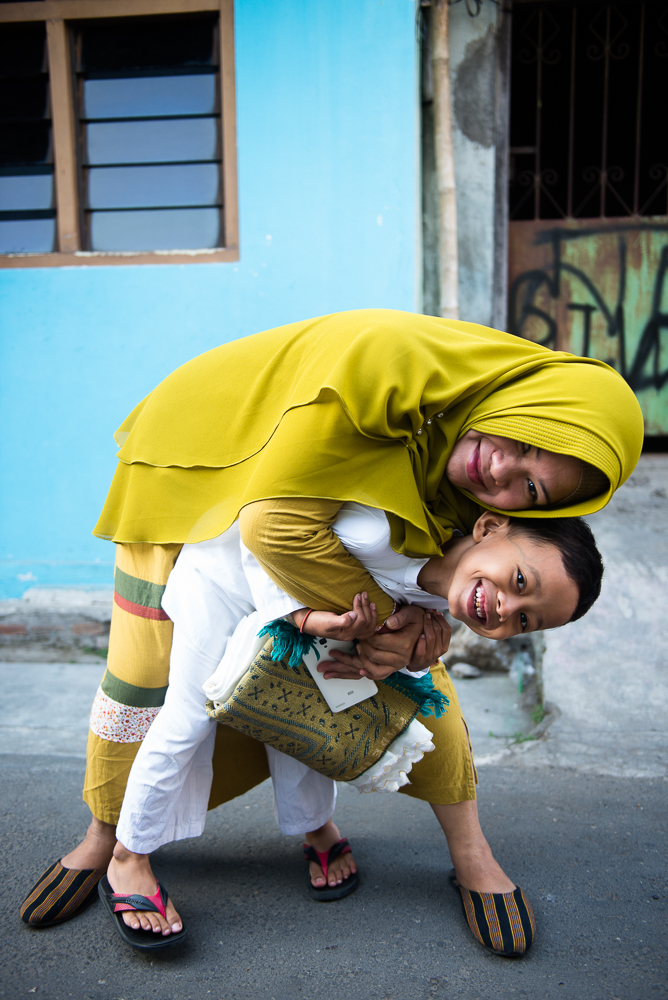
I thought it might be fun to share a few photos of what I saw in my husband’s neighborhood in Solo, Central Java during Eid al-Fitr. Ramadan celebration photos coming right up! But first I want to tell you a bit about how Ramadan looks in Indonesia.

When does Ramadan take place?
Ramadan’s changes yearly because it’s based on the Islamic calendar. It begins the morning after the crescent moon is visible to the naked eye, so that’s why dates can vary in different parts of the world.
The fast lasts from sunup to sundown and includes liquids, food and cigarettes. Aside from that, fasting also includes abstaining from sex and impure thoughts. Practitioners must avoid sexual or violent thoughts. Women cannot fast while they have their periods.
Every Ramadan morning around 3am, a man starts cajoling people awake over the loudspeaker “Sahur…sahur…sahur…sahur!” letting them know it’s time to get up for the pre-dawn meal, called sahur, before the fast. For the first week or so each Ramadan, I am jolted awake and feel as if there is a stranger in my bedroom. But after the first week, I learn to sleep through the announcement.
When people break fast at sundown, they start with small snacks or sugary drinks to make it easier on their stomachs. One of my favorite Indonesian Ramadan drinks is kolak, which has coconut milk, boiled bananas, palm fruits and a bit of palm sugar and cinnamon. Yum.
Since Indonesians are true entrepreneurs, there are always tons of people with stands set up around 3 or 4pm on the side of the road selling takjil or drinks and snacks to break fast. The first week of fasting is always a wild scene at the local supermarket. There are tons of people there stocking up for meals later in the day. But as people settle into the fast, life seems to sort of get back to normal. Throughout the month though, the roads get very busy right before fast breaking time in the afternoon, as people race to get home or to break fast with friends or family.
Despite having a very physically challenging job as a painter, my husband also fasted through Ramadan. As the weeks went by, and Ramadan was almost over we made plans to visit his family in Solo (about 2 hours away) for Eid al-Fitr, the end of Ramadan.
We prepared cookies and gifts to bring to his family and set out on his motorcycle. Every year there is a mass exodus of Indonesians to go home for Eid al-Fitr. Since we left the afternoon before Eid al-Fitr the roads were busy, but not at a standstill as they may have been the days before when most people left for home.
We reached his house right at the breaking fast time and his family had prepared some drinks and snacks. Everyone broke their fast together.
That evening tons of firecrackers and fireworks started going off. Next, men started chanting “Allah Akbar” from the mosques. In Java, there are always multiple mosques within walking distance and they all have a sound system. The Allah Akbar chant becomes more and more frenetic and rarely stops. It went on through the evening and into the early morning hours. In my husband’s neighborhood, someone got out a karaoke machine and they started singing classics. Even little boys got in on the singing. With the mix of religious and secular sounds, it was an odd and very Indonesia moment for me.
The takbir procession
Next, my husband and I went out to take some photos of the takbiran. In the weeks leading up, I saw many people preparing giant lanterns and practicing music in Yogya, getting ready for the takbir procession. As I watched, adults and children chanted and celebrate the end of the fasting month, walking through the neighborhood together. Many of the kids carried torches.
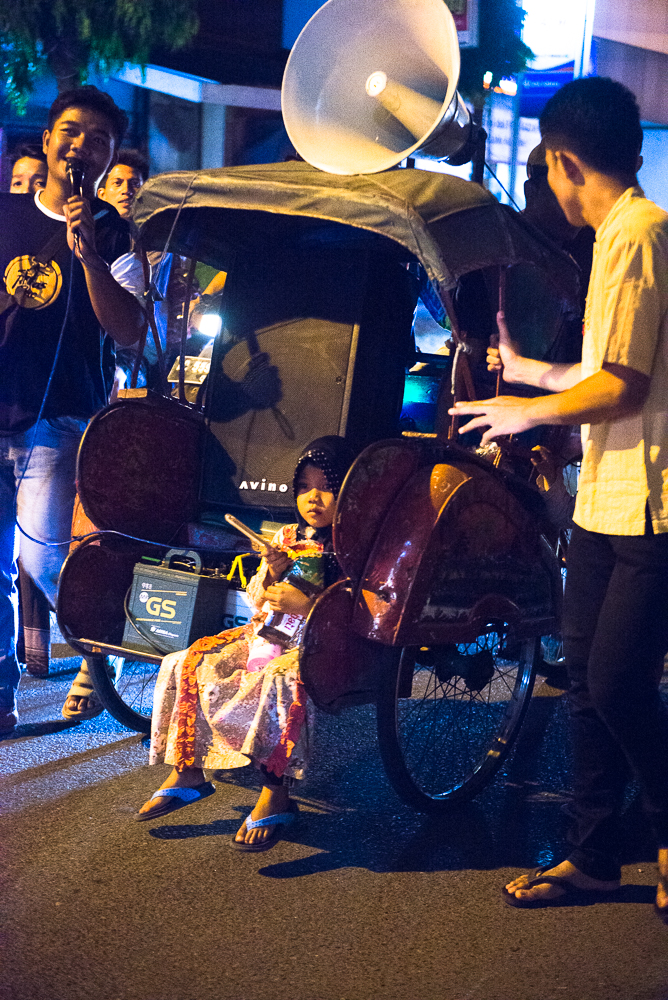
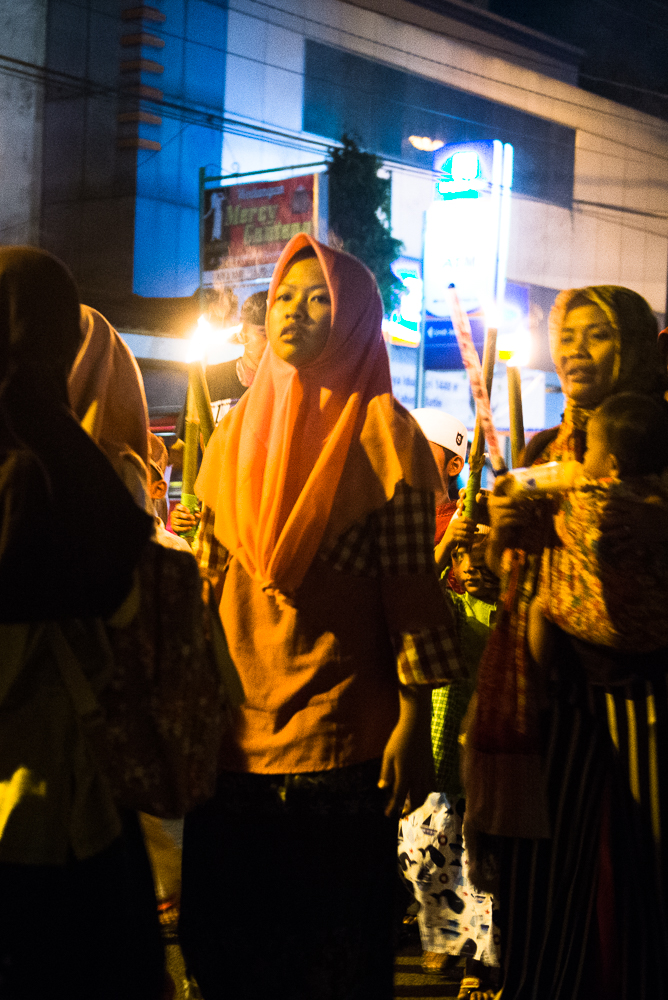

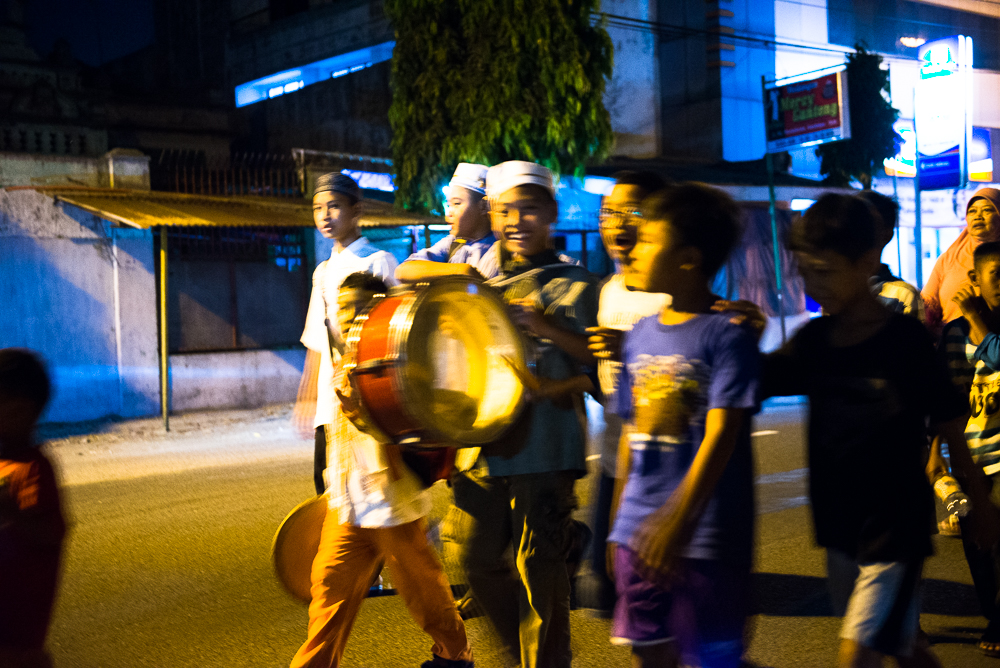
When we went home to rest, nothing had changed. The imam were still chanting over the sound system and I had very fitful sleep for about 2 hours before it was time to wake up again. If I were more of a raver maybe I’d be raring to go, but I had a massive headache and it was 5am, and I had to fight for a chance at the bathroom for a few minutes to wash the sleep out of my eyes.
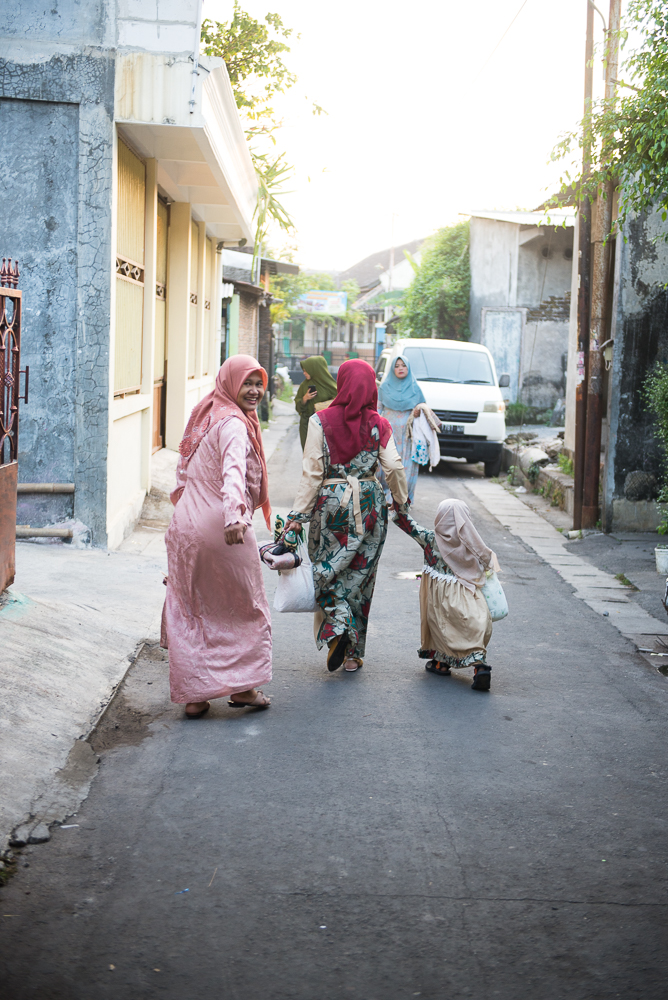
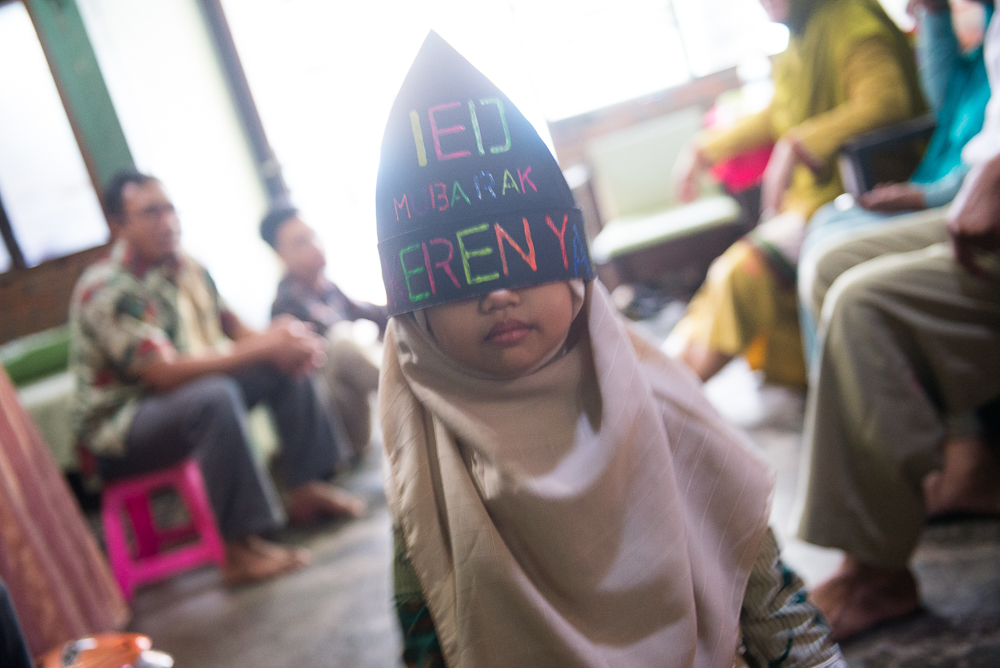
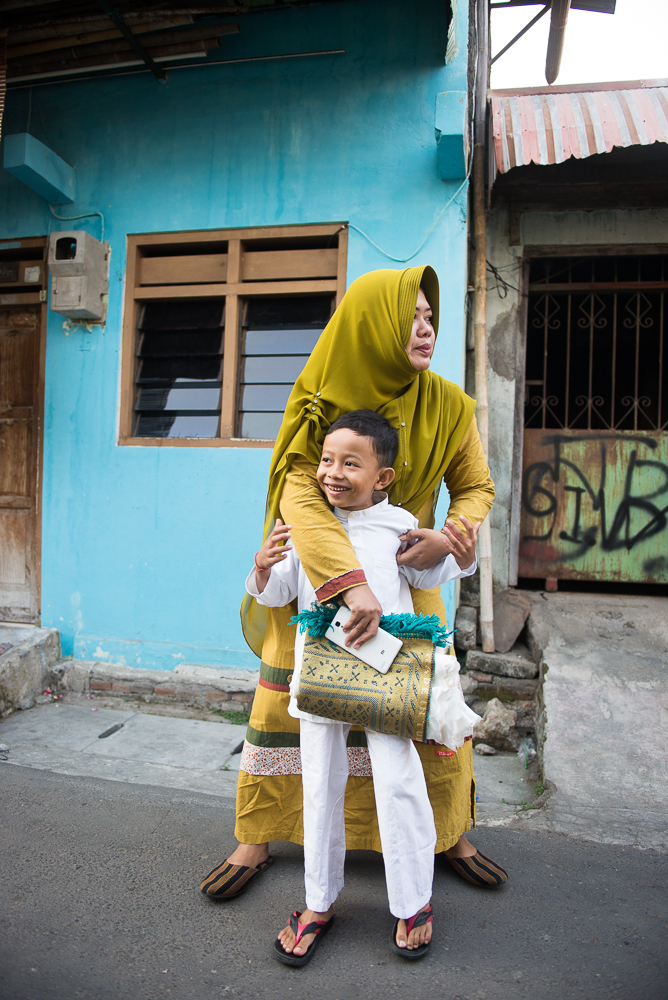
Next, it was time for the morning prayer. Before we set out, I got a few photos of my niece and nephew in their fancy outfit. I accompanied my husband’s sisters and mother, prayers are separated by gender. The prayer takes place in the street, which has been blocked off. It must take place there since the mosques wouldn’t have enough room to accommodate everyone.
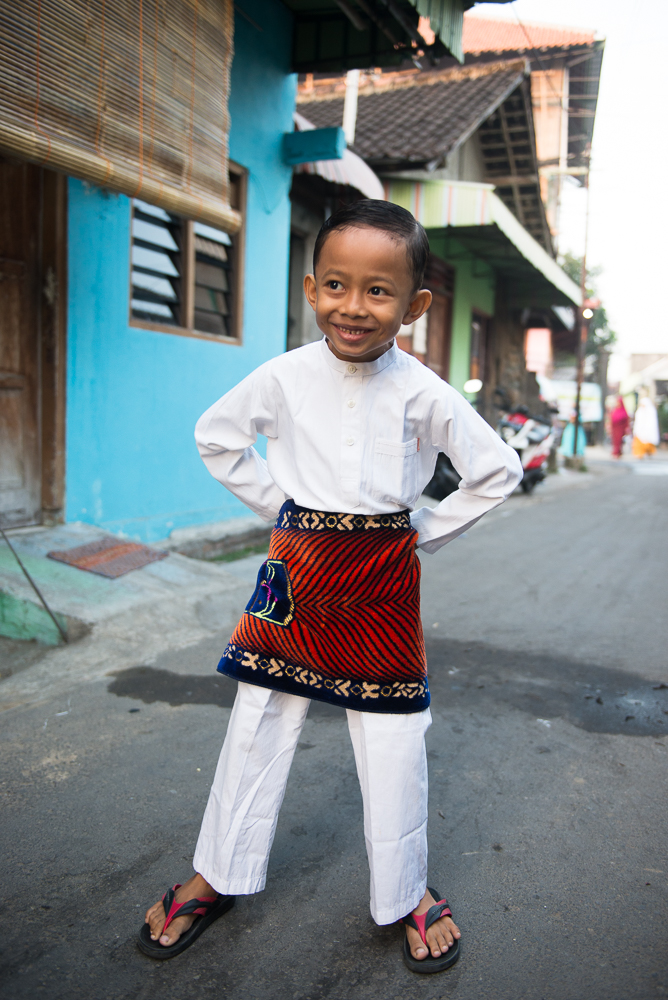
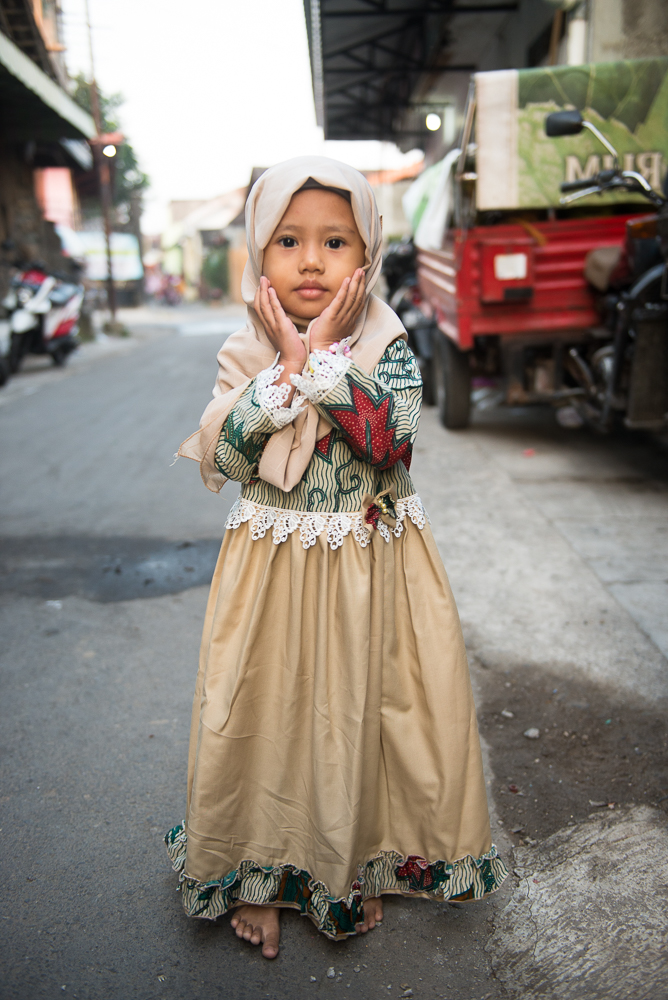
My little nephew was really curious about why I wasn’t going to pray, but was only going to take photos. He is at the age that he is asking some good questions.
As the prayer took place, I quietly took some photos. After the prayer, there was a sermon, and my sisters-in-law beckoned me over to sit with them. In typical Indonesian fashion, people had their own conversations as the sermon blared over the loud system. It was so intense that a little girl next to me burst into tears. Kids here are pretty much immune to noise, so that tells you how loud it really was.
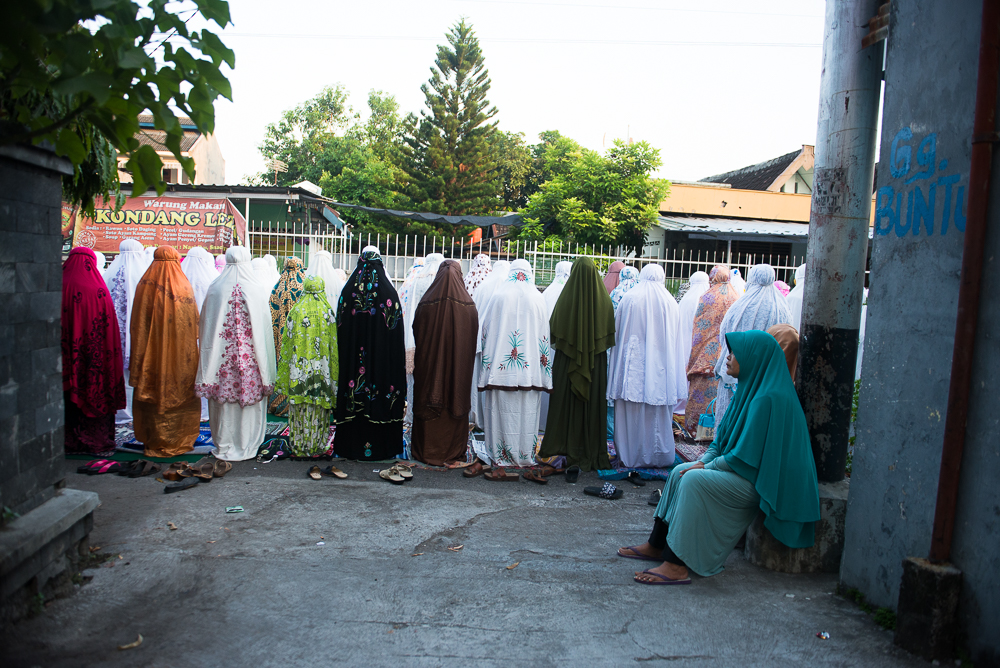
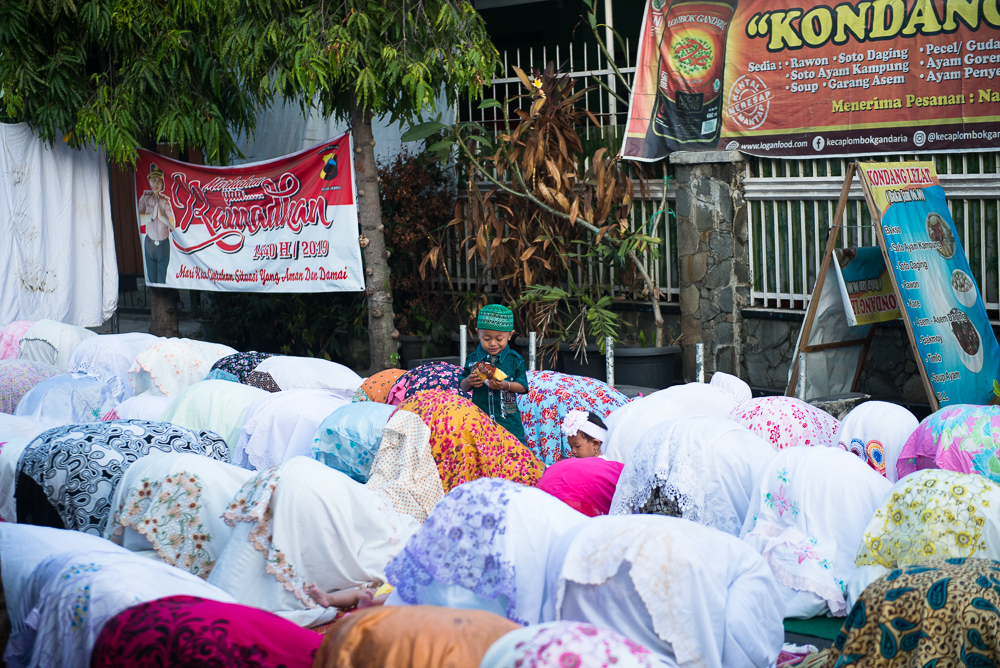
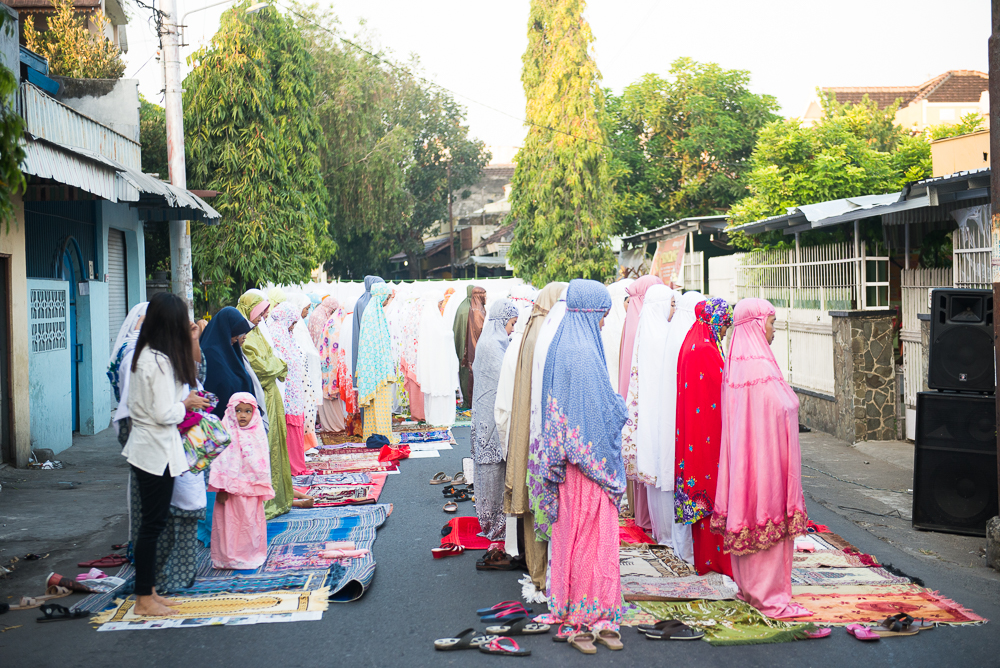
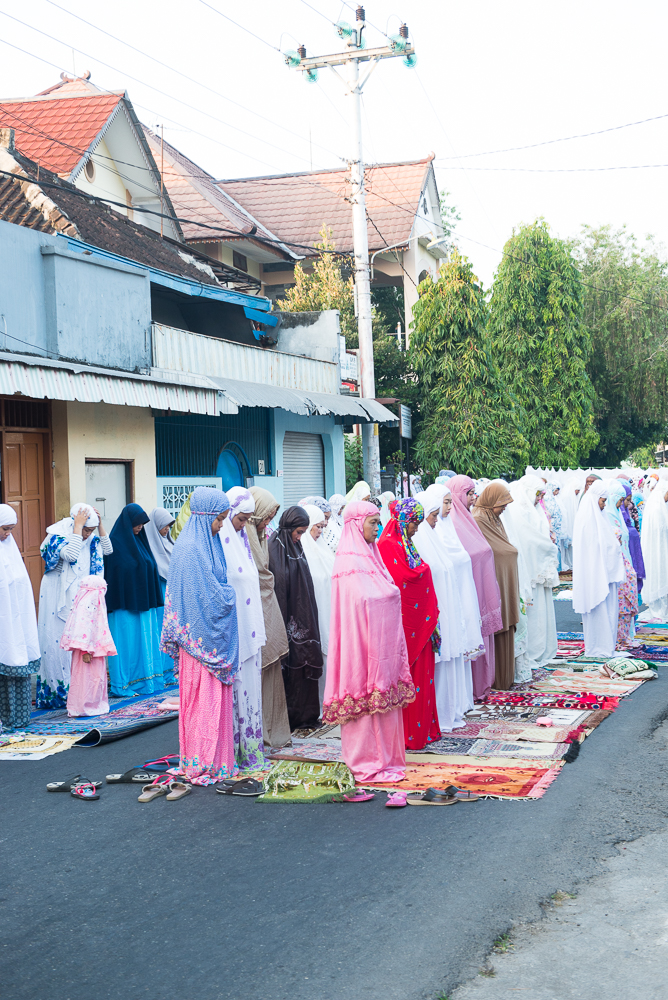
I took selfies with my little niece (she is a selfie pro) and sister-in-law while trying to follow the sermon. Sitting very close to other women and not experiencing a lot of staring, I felt a real sense of community. When my niece and nephew consider me just an aunty they like, without considering me different, that means a lot.
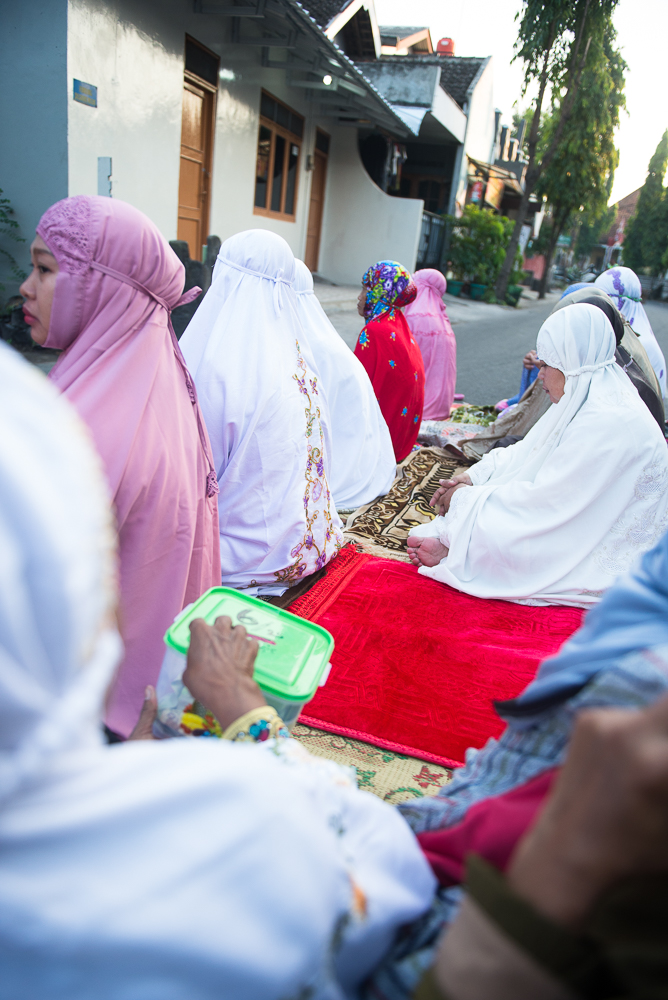
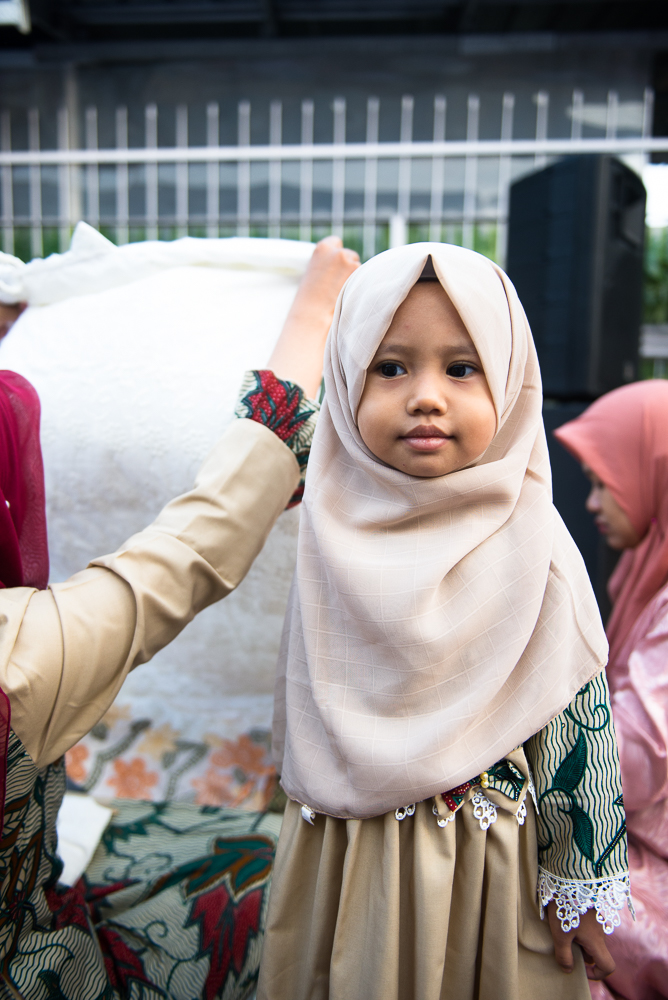
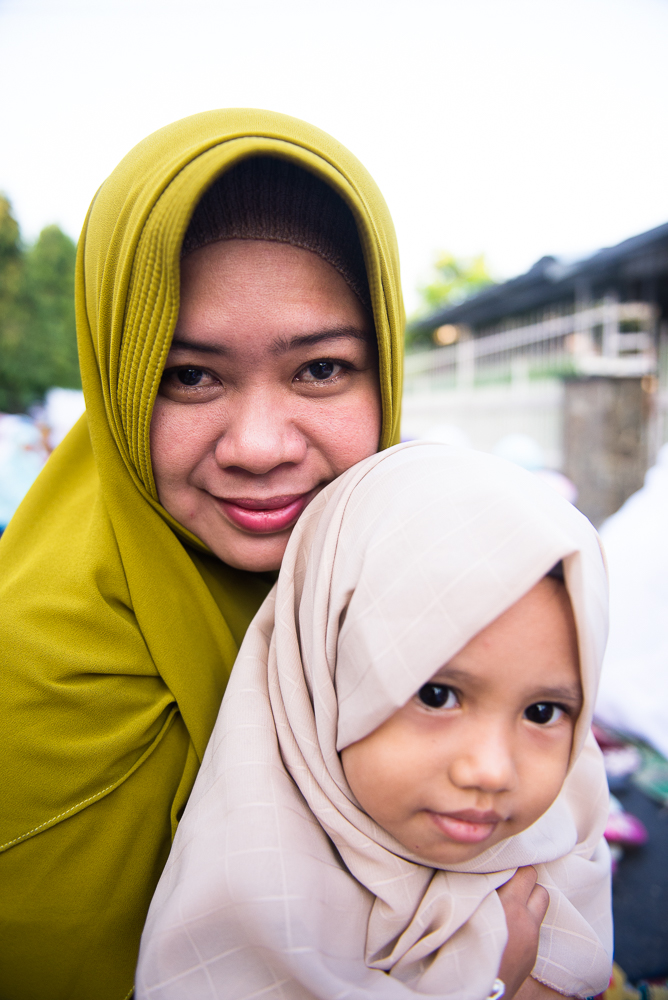

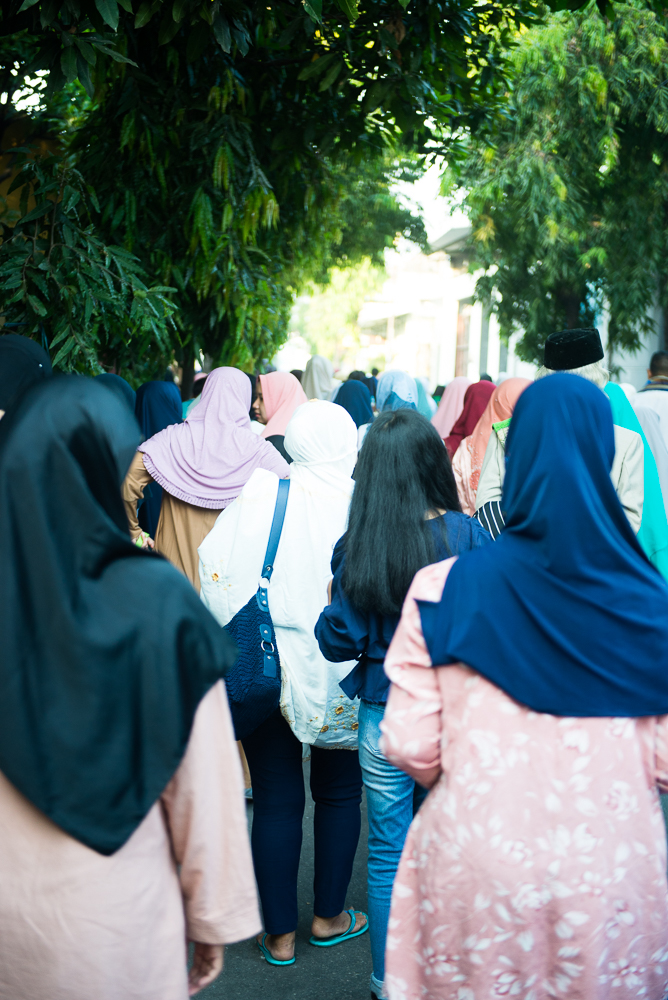

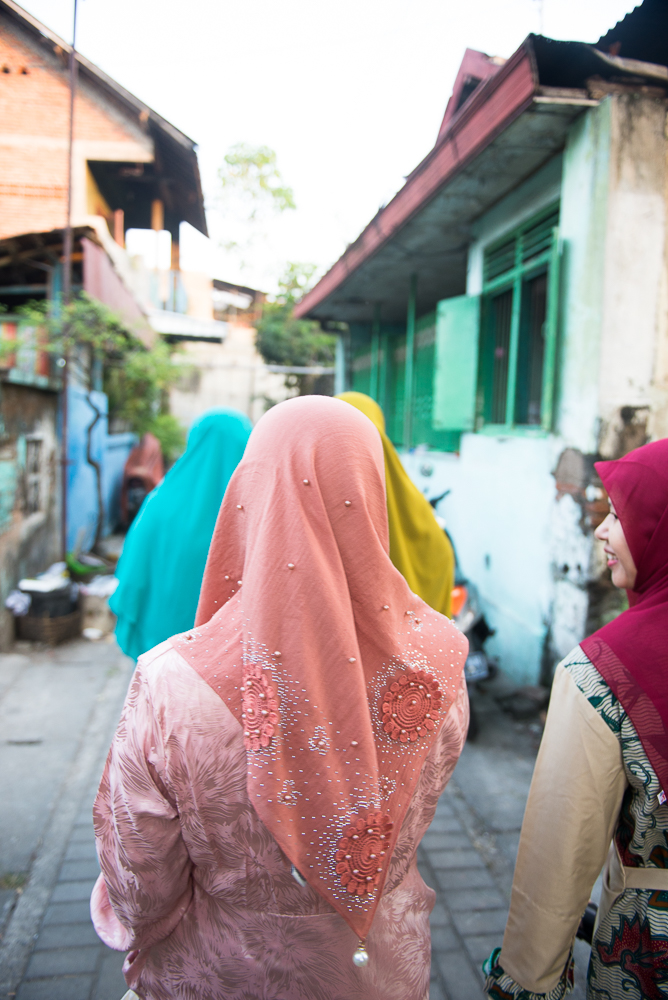
When the sermon ended, we said hello to a few neighbors and extended family members and then slowly walked back to my in-law’s house. The sun was slowly coming up and everyone was resplendently attired in bright colored formal outfits.
But that is not the end of the celebration. There is another very important part.
Saying sorry AKA the big “my bad”
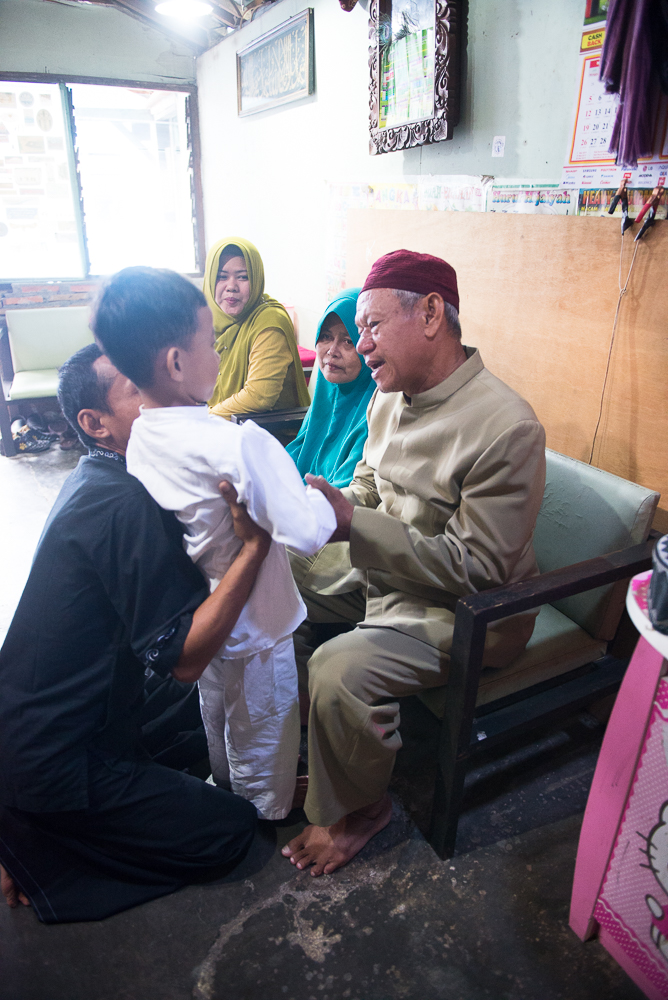
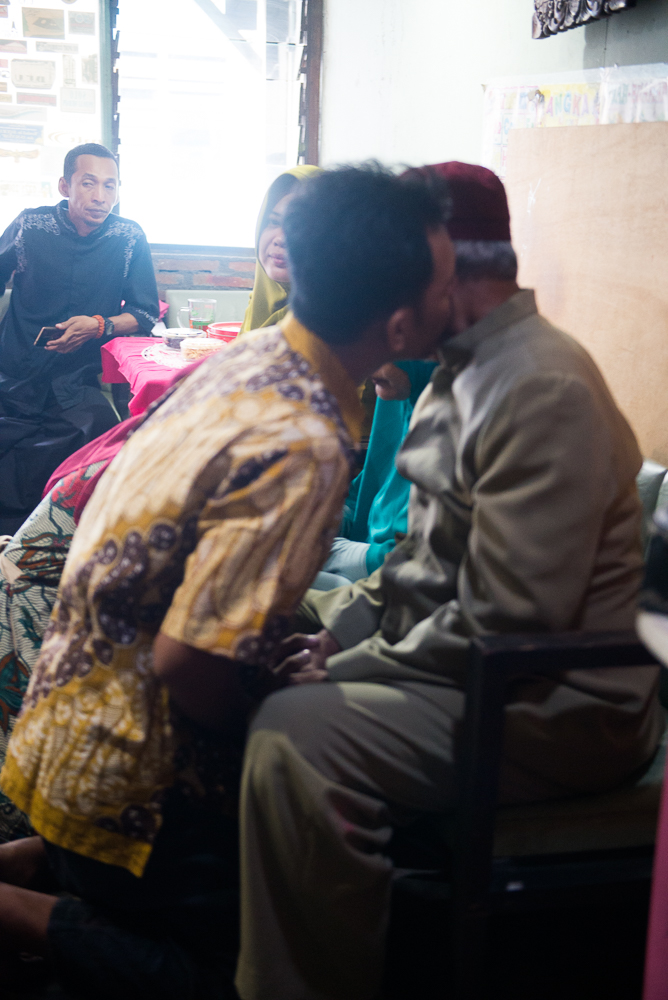
There is so much to say in an article about Ramadan but I can’t leave this out. When we got home, my parents-in-law sat down and their children started coming to them and kneeling down. They asked for forgiveness for any wrongdoing over the past year and their parents forgave them. After every one, even children, circled around family circulated from house-to-house doing the same thing.
During this time, small children receive spending money in the form of crisp, new bills. Check out these photos I took of the people who sell new money on the side of the street before Eid al-Fitr. Their service saves people from spending hours in line at the bank.
I want to find out more about the process of making amends at Eid al-Fitr. I always wonder if there is any earnest conversation when there are really large grievances, maybe akin to some of the conversations that take place in restorative justice initiatives. For people who live in small quarters, and in close proximity to their neighbors, they are privy to a lot of information about each other. I know frustrations must crop up. I want to know if this chance for forgiveness is helpful.

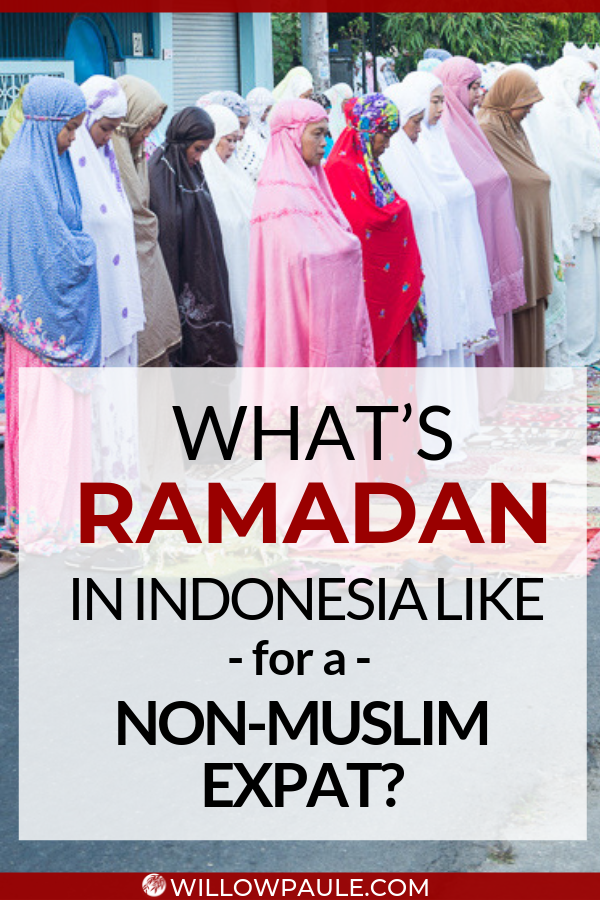
What’s Ramadan like as a non-Muslim?
To be honest, I wanted to take part but I felt resistant to the idea of asking for forgiveness for something I may have or have not done wrong. It felt foreign and quite difficult as an introvert who doesn’t like a lot of attention. But I decided to do my own version with my parents-in-law when I had to leave to go back home on the train and it was heartfelt.
I was grateful that I didn’t feel any pressure to pray or convert, or do something I was uncomfortable with, because I’ve had my own share of traumatic religious experiences. So, although the celebrations are pretty intense with sleep deprivation followed by early-morning prayer and all-day social interactions, I was still grateful for the experience and that no one told me I was living life wrong.
Finally, I am sure you’ve noticed that I’m no expert on Islam. But I hope this article about Ramadan offered you some insight into the holiday, and how it is interpreted here on Java.
Is there anything you’re still wondering about after looking through the photos and reading? Leave your question in the comments and I’ll get back to you.
When you subscribe to my email list, you’ll receive the FREE email course, Create A Compelling Photo Story In One Week, and hone your storytelling skills. I designed the course to be easy enough to enact in a week, but with concepts you can continue using in your photography going forward. So, if you’ve been invited to a religious event, a special ceremony, or into someone’s life and want to document your time with them, this class will teach you the fundamentals of photo storytelling.

In the course, I teach you how to take your idea for a photo project, make the photos, and then create an engaging sequence that tells the story well. By the end of the week, you’ll have a finished body of work to share! Sign up for free here.


4 Responses
I like seeing the many colors of the celebrants! (The pinata is amazing!)
Glad you enjoyed it! Yes, people are not afraid of bright colors in Indonesia! Isn’t the pinata cool? It was super hard to break. They had to take a knife to it.
Tulisan yang bagus. Semoga maklum dengan tradisi “sound system” di masjid hehehe. Saya sebagai Javanese sudah terbiasa dari kecil untuk “menerima” polusi suara itu hehe.
Ya, walaupun sudah lama tinggal di Indonesia saya harus mengakui kalau suara-suara di Indonesia memang masih asing buat telingga saya kadang-kadang. Haha… Tapi saya menerima apa adanya. Terima kasih komenter dan membaca blog saya, Rizka!