Table of Contents
5 Simple ideas to start your own photo story now
Every photo tells a story, so it goes to stand that a series of photos can tell an even richer story. However; it’s overwhelming to figure out how to start. You have to decide what issues you’re interested in, who to photograph, and get permission. That’s why I’m sharing 5 simple ideas to start your own photo story in this blog post.
This blog is a companion to my free course, Create A Compelling Photo Story In 1 Week. Below, you’ll find examples of successful and moving photo story projects plus ideas for you to start photographing your own photo story.
Create a Compelling Photo Story helps you get started with a project right away. it’s not as hard as you think to find a fascinating subject for your photo story. I want you to be able to begin this course with an accessible subject, so you can focus on building your storytelling skills.
Why try series photo stories?
Go deeper, tell a more complete story, build your technical skills, challenge yourself. But, don’t get sentimental and be tempted to include unnecessary images. In the course, I give you some guidelines to assess which photos belong in your sequence, and which you should discard.

Okay, here are the 5 simple ideas to start your own photo story I promised.
#1 Start with a family member
Why not start with a family member? Your kids, your partner, your parents, or someone you consider like family. Here are a few simple things you can capture:
- Children – Kids offer the opportunity to capture remarkable changes over a relatively short period of time. Consider taking photos of your kids as they grow: their firsts, like the first time they walk, their first swimming lesson, or the first time they breastfeed. Think about how you can document their attitude, their emotions, and what makes them unique.(Becs Viveash, who owns Viveash Photography, makes beautiful photographs of her children.)
- Partner – Capture your partner’s routine, metamorphosis, interests, or love offerings. (Maureen Drennan documented her husband’s depression (some nudity) but aside from sharing his struggle, she used photography as a tool for processing a difficult situation. In the Feature Shoot article about her work, she says she wasn’t sure if photographing him would be the right choice since he was really struggling with depression. “She was hesitant at the onset, fearing she would ‘isolate him further by picking up the camera.’ When she did, she found it became a lifeline tying them together.”) I agree that photography can be a tool to bring people together if you use it right.
- Or, your relationship with your partner: Capture moments together, good and bad, and see how things evolve over months/years. (Pixy Lao explored gender roles with portraits of her boyfriend and herself (some nudity). Her images shocked some because she subverted the power dynamics people are used to in heterosexual relationships. She says of how the work affected her relationship, “The project has made us partners. This project is based on our relationship and grows with our relationship.”)
- Parents: How about a series of photos to document a parent’s fall romance, their hobby, or the aging process. There are many impressive photo series chronicling aging parents’ earthly goodbyes. Yet there is still room for more good work.
When we strive to make our work and vision deeply personal, it can only add to a specific genre because no two experiences are the same.

#2 Like family, focus on your pet
Cats have always been a part of my life. When I was a kid, cats would just show up at our rural home in West Virginia. I don’t remember a catless time. So, it only stands to reason that I love taking photos of my cats.
When I was a kid, we had a cat who’d been caught in a bear trap and limped. And another, who had only three legs (aptly named Tripod), but who could climb a tree at full speed. We found Puss N’ Boots at a canal. She was so hungry, my parents were able to lure her to their car with prunes. After getting healthy, she became a trick cat. Standing on her back legs, she’d swat at the gnats circling her head.
Photographing animals is a different task than just loving them, though. Let’s be honest, you probably see tons of photographs and videos of animals online; many of us spend more time than we’d like to admit watching animal videos. There is something undeniably entertaining about pets.
But there are a few important questions you should ask yourself in order to make good photos of your pets. How can I:
- Create images of my pets that convey their unique qualities?
- Show their personality?
- Make photos that show them as dynamic characters (not one-dimensional), and let their stories emerge?
And will I:
- Document their relationship with a human or another animal, or focus on only one pet at a time?
For some reason, if I try to take his photograph, he usually turns his head. I’m not sure what’s exactly ‘right’ or ethical when considering whether animals are okay with photographs. But if they seem unbothered, then it seems okay, right. That makes pets a good bet for a photo project.

#3 Capture someone who creates handmade things
I love watching people do things by hand. And, luckily, many artisans and creatives are open to being photographed.
Imagine if you created handmade things and someone wanted to follow your journey and learn more about your work. How would you feel? Honored, right? Share with potential subjects why you are interested in taking their photographs. What part of their work you want to capture and how you plan to use the photographs. They may be interested in using some of the images for their own marketing–so it can be a win-win in many cases.
In Indonesia, there are so many tradespeople, artisans, and small business owners who create handmade products from scratch. I wanted to learn more about these micro-entrepreneurs and that’s why I created the series of photographs, Odd Jobs.
Also, assuage your potential subject’s fears; maybe they feel shy and not very confident about their body. If your potential subject isn’t open to photographs of their face, ask if you can make images of just their hands while they work. Perhaps once they’ve learned that you’re not threatening, and you’ve developed a deeper relationship with them, you can revisit taking photographs of their face.
The more vulnerable and open you are with your potential subjects, the more they will trust you.
These days people create tons of videos for social media. From making a cake to building homes, it’s become the norm to document.
So, it may be easy to get permission (whether explicit or implied with a smile) to photograph one time. However, creating an ongoing relationship where you document your subject over time takes care and an ethical approach. But it’s definitely possible!
#4 Follow the journey of a farmer or a farmer’s market worker
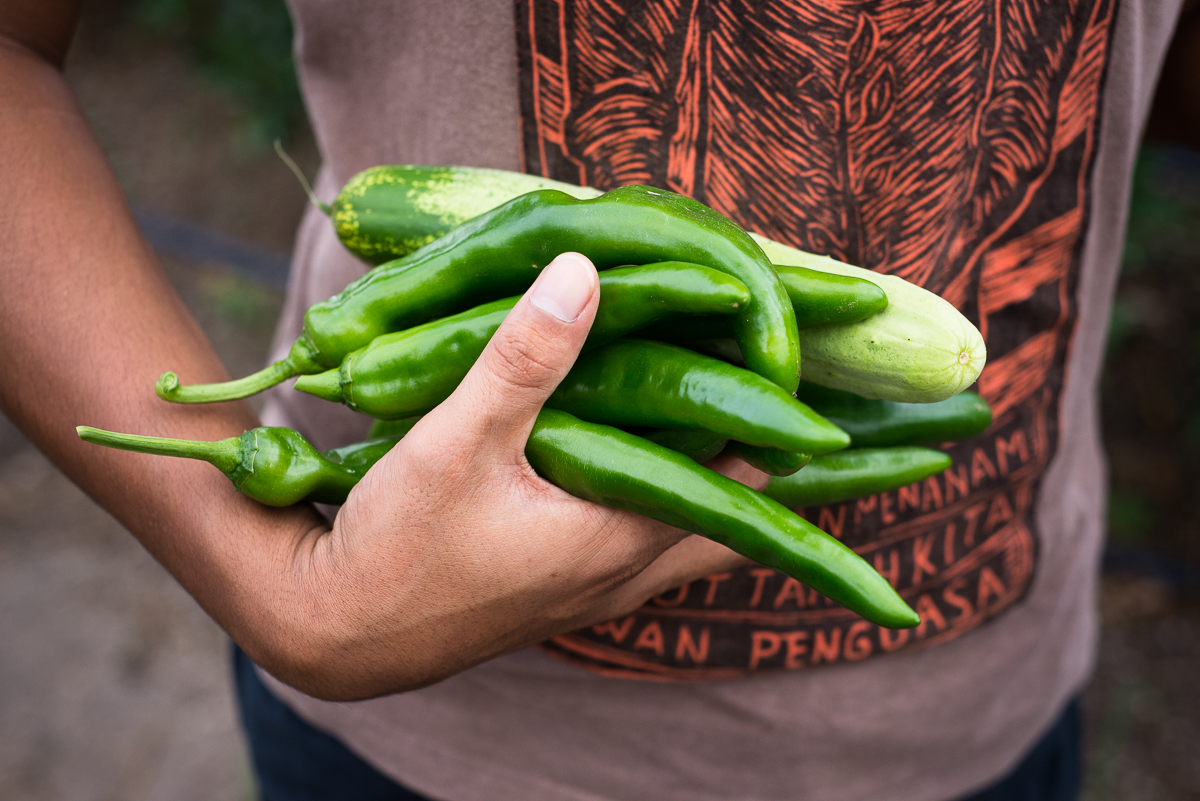
There are a few great things about photographing at farmers’ markets. You get to meet interesting people plus the colorful produce is totally stimulating. There is a cornucopia of shapes and textures, and there are great backgrounds for human interest shots. Btw, I recently wrote about how endlessly fascinating I find fruit and veggies. Judging from the response, I am not the only one.
Also, farmers’ market-goers are usually in a good mood because the markets have a festive atmosphere. Therefore, many of them are open to photographs. Also, the people working the stands are there to engage with people. The vibe is markedly different than visiting most grocery stores. That’s why gaining access to photograph people at farmers’ markets isn’t usually that difficult.
I’d consider farmers’ markets a strong contender as a simple idea to start your own photo story.
Similar to people who work at farmers’ markets, farmers themselves are often interested in getting to know people from their community. Especially farmers involved in organic or community farming initiatives, who are glad to share information about their farming practices. They enjoy educating people about where their food comes from.
Do some research and find out what’s being grown in your area. Next, see if you can visit the farm. I enjoy the work of Yolanta Siu who is currently documenting farming projects in Jeju, South Korea.
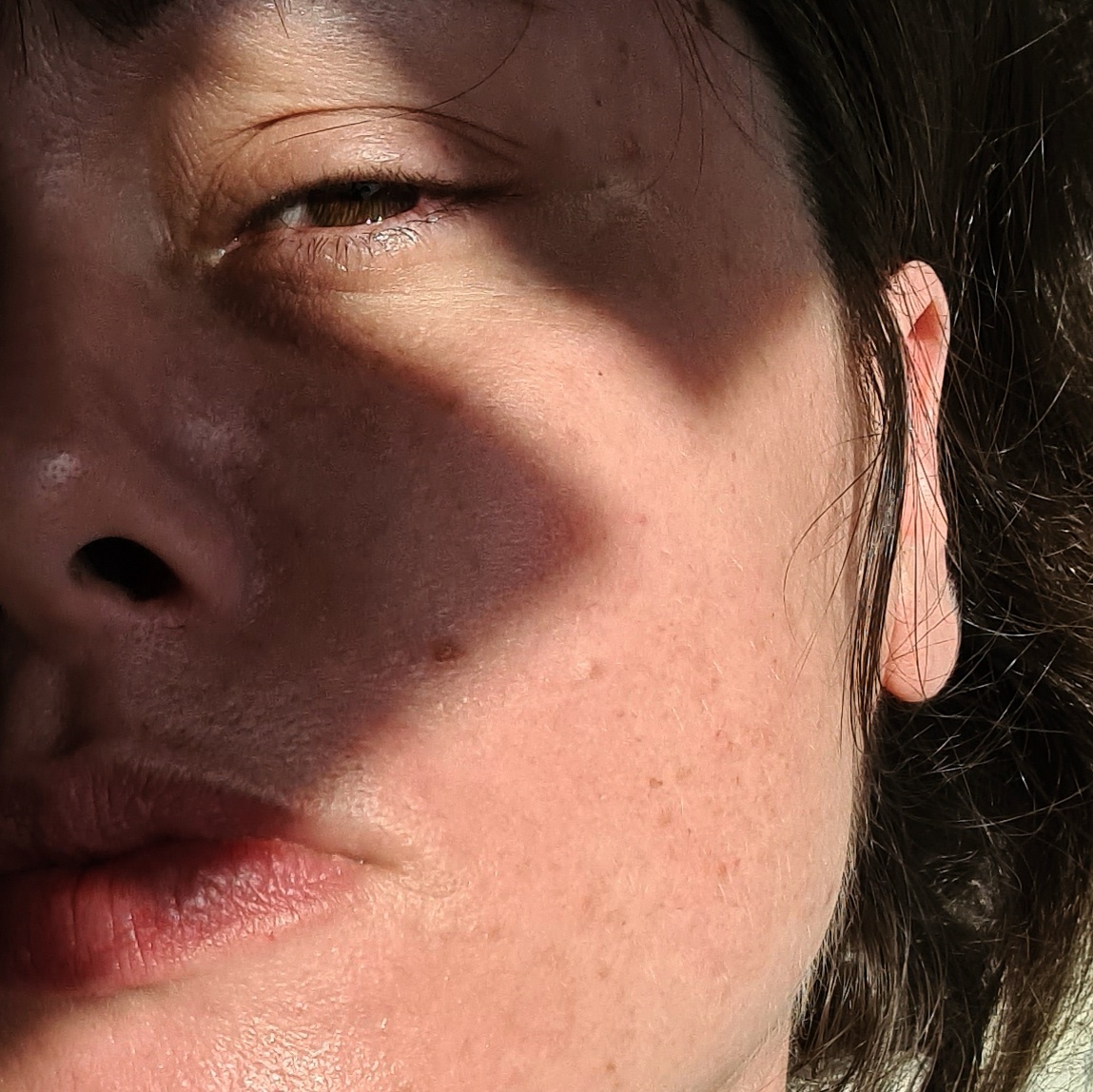
#5 Never underestimate the power of a self-portrait project
Depending on your personality, you may think this is either the easiest or the toughest photo story idea on this list. For me, defining important moments in my life and how to convey them visually with images is not easy. But I took a self-portraiture class in fine arts school and it was a great learning experience.
There is something about seeing yourself immortalized in photographs that can make certain aspects of your life more clear.
There are tons of ways to approach self-portraiture. You can focus on honing your concept, or decide to use the portraits as a chance to study light. Luckily, if you are documenting yourself, you already have your own permission. However, sometimes it takes time to warm up and really feel like yourself in the photos. The important thing to remember is that you’re in control!
You don’t need a lot of tools. But you should learn to set your camera up on a tripod or shelf. You will be using the camera’s self-timer a lot.
Another option is to set up the photographs and then get a friend’s help with holding the camera. I enjoyed this project by Jim Allen Abel. It makes social commentary with self-portraits in different Indonesian official uniforms with Abel’s face obscured. Jimbo told me that he prepared and posed all the photos, despite not owning a camera at the time.
Besides Jimbo’s project, there are tons of photographers who take photographs of themselves. If you need examples, do a quick Google search.
So, there you have it, 5 simple ideas to start your own photo story. Are you ready to get out and photograph? Or are you still asking yourself, “But, how do you really START a photo story?”
Well, that’s where I swoop in to help you like a photo coaching superhero. Earlier in the article, I mentioned a FREE email course I designed. It’s called, Create A Compelling Photo Story In One Week.
My course takes you through the planning process. It teaches you to really hone in on your goals. First, who you’ll photograph, next, what story you plan to tell, and finally, how you will structure and edit it.
I’m hearing good things about the class so far.
Gillian says, “I’m a writer and blogger, but I use my Instagram feed heavily, and I’m loving this course and thinking about telling a story visually rather than in words.”
And Mira mentions that she likes the way the course explains the difference between a photo story and photo essay. She also says, “So far [the course] is extremely clear, insightful and helpful even as a photographer!”
Telling stories with images
There is a big difference between taking one great photo and being able to tell a cohesive story through photography. That’s why I felt there was a need for this course, which walks you through step-by-step, to plan and execute your own engaging photo story. The best part? At the end of the week, you’ll have a finished body of work. You can submit it to an exhibit or publication, share it on social media, or just put up on your wall.
So, want to sign up? Here’s a link to the free email course.

After reading this blog, do you know who you’ll be photographing? In the comments below, I’d love to hear!